


Premium Italian Olive Oil Review for Home Cooks

A great bottle of olive oil should earn its place on the table before the meal is even finished. You taste it in the peppery finish over grilled vegetables, the fruitiness on warm bread, and the way a simple bowl of beans suddenly feels considered. This premium italian olive oil review looks at what separates a memorable extra virgin olive oil from a bottle that merely says “Italian” on the label.
For American home cooks, Italian olive oil can be confusing territory. Italy is a respected origin, but it is also a broad one. A bottle may carry Italian imagery without telling you where the olives grew, when they were harvested, or who handled the oil between grove and kitchen. Premium oil asks more of the producer, and it should give more back to the cook.
What a Premium Italian Olive Oil Review Should Examine
Price alone does not make an olive oil premium. A beautiful bottle, an Italian flag, or a vague claim of “first cold pressed” cannot replace a clear account of origin and care. The strongest oils have a story that can be traced from the olive grove to the bottle.
Start with provenance. Italy produces oils with dramatically different personalities, shaped by climate, olive varieties, and local tradition. Umbria, a landlocked region in central Italy, is especially admired for oils with fresh green character, savory depth, and a lively peppery close. That distinctiveness matters when you want an oil that can finish a dish rather than disappear into it.
Then consider who is responsible for production. A producer who harvests, presses, and bottles its own oil maintains meaningful control over quality. Olives are a fruit, and the time between picking and milling has a direct effect on freshness and flavor. When that chain is clear, a buyer has more reason to trust what is in the bottle.
Finally, look for a seasonal point of view. Olive oil is not a shelf-stable commodity in the culinary sense. It changes with each harvest. A limited annual collection recognizes that fresh oil has a particular moment and character, much like a vintage wine. It also encourages you to buy with intention and use the oil while its flavor is at its best.
Flavor Is the Real Test
True extra virgin olive oil should not taste flat, greasy, or vaguely buttery. It should taste alive. Depending on the olives and harvest style, you may find notes of cut grass, green almond, artichoke, tomato leaf, herbs, or fresh pepper. Bitterness and pungency are not flaws when they are balanced. They are often signs of naturally occurring olive compounds that give fresh oil its pleasing structure.
For many people raised on mild supermarket oils, that peppery sensation at the back of the throat can be a surprise. In a quality oil, it is part of the experience. The goal is not harshness. The goal is brightness, fruit, and a clean finish that makes you reach for another bite.
Umbrian extra virgin olive oil is particularly at home with foods that leave room for its personality. Spoon it over a white bean soup just before serving. Use it on roasted squash with flaky salt. Dress bitter greens, lentils, tomatoes, or a thick slice of toasted country bread. It can make a grilled steak feel more Italian with nothing more than a final pour and a pinch of salt.
That does not mean premium oil should be saved only for special occasions. It is excellent in everyday cooking, especially when its flavor remains visible. Use it for a simple vinaigrette, eggs, pasta with garlic and greens, or a quick pan of sautéed vegetables. For very high-heat cooking, a more economical oil may be sensible. A premium bottle shines brightest when you can actually taste it.
Why Direct From Umbria Matters
The phrase “product of Italy” is a starting point, not a full answer. It does not always tell you whether the olives came from a single region, whether the oil was blended from multiple sources, or whether the producer knows the grove and harvest firsthand.
A direct farm-to-bottle model offers a more personal alternative. It connects the bottle in an American kitchen to a specific place, family, and harvest in Italy. That connection is not just romantic. It gives context to the flavor and accountability to the process.
Bonacci EVOO reflects this approach through oil personally harvested, pressed, and bottled in Umbria before being brought directly to the United States. For a buyer who values authenticity, this kind of control is more meaningful than broad marketing language. You know the oil is presented as a seasonal collection with a defined source, rather than as an anonymous pantry staple.
There is a practical benefit, too. The closer the relationship between grower and customer, the easier it is to understand what you are buying. Premium food should not require a chemistry degree or a detective’s work. You should be able to recognize the region, the producer’s role, and the reason the oil tastes the way it does.
Freshness Deserves More Attention Than Price
A premium bottle costs more because growing, harvesting, milling, bottling, and transporting excellent oil with care costs more. Still, value is not simply about the price per ounce. It is about how much pleasure and usefulness the oil brings to the food you make.
A fresh, expressive oil can replace extra ingredients. A bowl of pasta needs less cheese when the finishing oil is fragrant. A plain ricotta toast becomes a lunch. A platter of raw vegetables feels generous with good oil, salt, and a squeeze of lemon. In these moments, the bottle is doing real culinary work.
To protect that value, buy a size you will use within a reasonable period after opening. A 500 ml bottle is often a smart choice for households that cook regularly and want to enjoy the oil while it remains vivid. Multi-bottle bundles make sense for serious home cooks, frequent hosts, or gift giving, but only if the bottles can be stored well.
Keep olive oil away from heat, light, and prolonged exposure to air. A cool, dark cupboard is better than a spot beside the stove or on a sunny counter. Close the cap promptly after pouring. These small habits preserve the aromas and flavors you paid for.
The Right Bottle for Cooking, Finishing, and Gifting
The best premium Italian olive oil is not necessarily the boldest or the most expensive. It is the one that fits the way you eat. If you love assertive greens, grilled meats, soups, and rustic bread, an Umbrian oil with pepper and green fruit may become a daily essential. If your cooking leans toward delicate fish or subtle desserts, you may prefer a gentler pour or simply use a lighter hand.
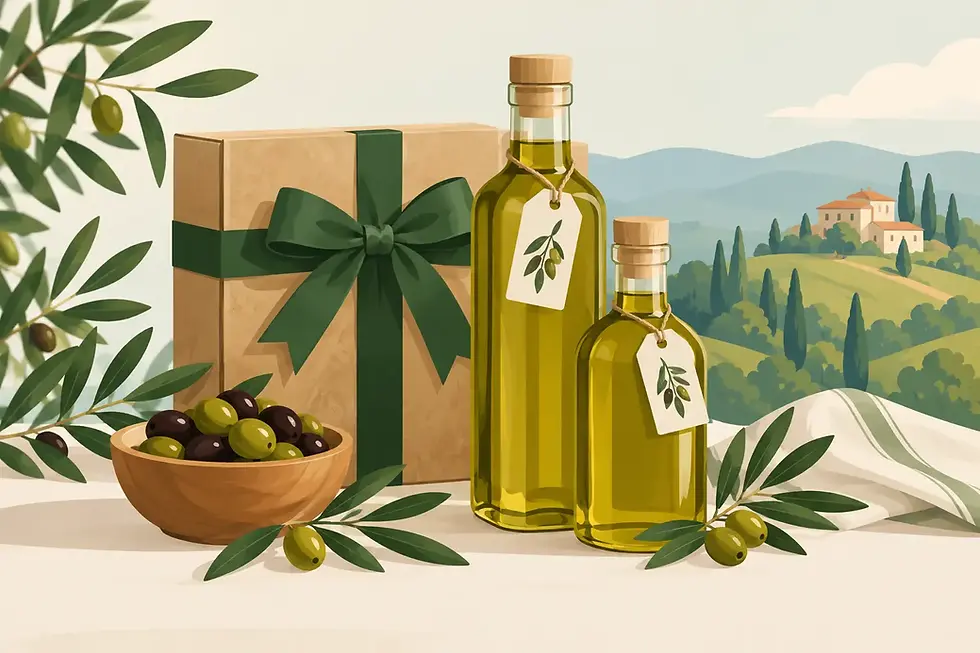
For gifting, provenance carries particular weight. A bottle with a real family and regional story feels more thoughtful than a generic luxury food item. It gives the recipient something to open, taste, and share at the table. Gift-ready sets and larger collections are especially fitting for hosts, newlyweds, food-loving clients, and anyone building a kitchen they are proud to use.
A premium oil also makes a graceful contribution to a dinner invitation. Bring it with a loaf of good bread, or pair it with a handwritten note suggesting a favorite use: over grilled peaches, on tomato bruschetta, or stirred into a warm bowl of farro. The most successful food gifts invite an experience rather than adding clutter.
A Better Standard for Your Pantry
When evaluating a bottle, ask a few direct questions. Can you identify where it comes from? Does the producer explain its role in harvesting and milling? Is the oil treated as a fresh seasonal food? And, once poured, does it bring clear fruit, bitterness, and pepper to the plate?
Those answers are more useful than flashy packaging or broad claims about Italian tradition. They lead you toward oils made with care and away from bottles that rely on the reputation of Italy without offering much detail behind it.
Keep one bottle of true extra virgin olive oil where you will use it often, then give it a job worthy of its character. Tonight, pour it over something simple while it is still warm, and let the oil be the ingredient that makes the meal feel complete.


Comments