

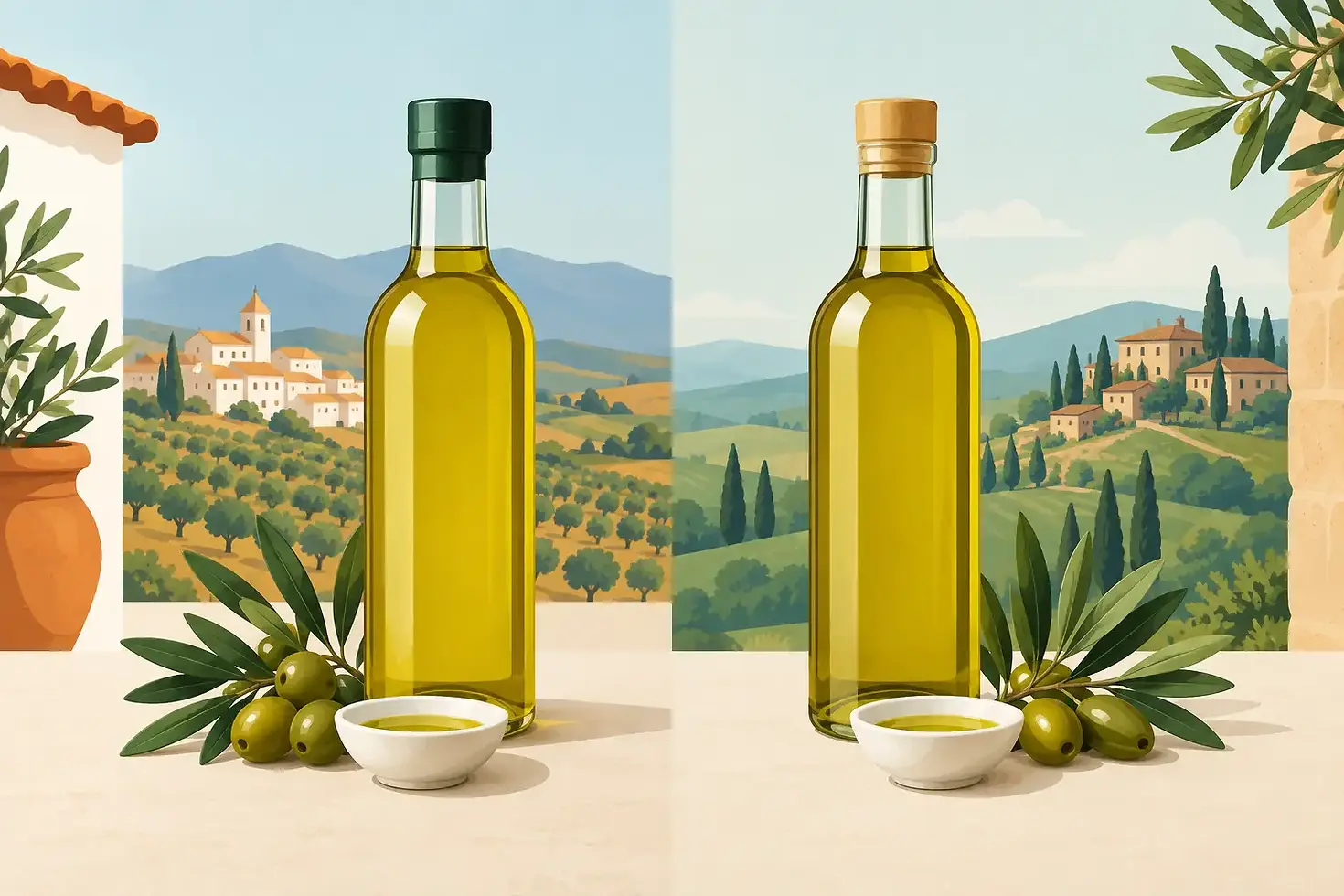
Spanish Versus Italian Olive Oil Compared

A bottle labeled Spain or Italy can tell you something useful, but it cannot tell you everything. In the conversation around Spanish versus Italian olive oil, the country is a starting point for flavor and tradition, not a shortcut to quality. The olive variety, the moment of harvest, the mill, the storage, and the producer's care all matter just as much.
For the home cook who wants an oil worth pouring over a finished dish, the better question is not which country wins. It is: what kind of flavor do you want on the plate, and can you trust how that oil was made?
Spanish Versus Italian Olive Oil: The Real Difference
Spain produces more olive oil than any other country, while Italy is celebrated for its regional diversity and deeply local food culture. Both make exceptional extra virgin olive oil. Both also make oils that are ordinary, old, poorly stored, or blended without much character.
The distinction becomes meaningful when you look beyond a flag on the label. Spain's vast olive-growing regions can produce remarkably consistent oils at scale, from gentle and buttery to intensely green and peppery. Italy's smaller regional identities often create more distinct, place-driven expressions, where an oil from Umbria, Sicily, Tuscany, or Puglia may taste markedly different from the next.
Neither style is automatically better. A carefully made Spanish oil can be extraordinary. A carelessly handled Italian oil can disappoint. For a premium bottle, traceability and freshness should carry more weight than a broad national claim.
Flavor: Broad Patterns, Not Fixed Rules
Spanish extra virgin olive oils are often associated with smoothness, ripe fruit, and an approachable finish, especially oils made from Arbequina olives. Arbequina is widely loved for its soft almond character and gentle pepper, making it easy to use in baking, vinaigrettes, and dishes where a delicate oil is welcome.
But Spain is far from one-note. Picual, one of its most important varieties, can be assertive and structured, with green tomato leaf, herbs, bitterness, and a peppery finish. Hojiblanca may bring a fresh, grassy profile with a pleasing spice. These oils can stand beautifully beside grilled vegetables, steak, beans, and bold Mediterranean cooking.
Italian oils are often described as greener, more herbal, and more aromatic, though that description is not universal. In central Italy, including Umbria, oils commonly show fresh-cut grass, artichoke, wild herbs, and a lively pepper sensation at the back of the throat. That pepper is not a defect. In a fresh, well-made extra virgin olive oil, it can be a welcome sign of naturally occurring phenolic compounds.
Southern Italian oils can be rounder and sunnier, with ripe tomato, almond, or mild fruit notes. Northern oils may be delicate and elegant. The point is that Italy offers a remarkable range of regional character. When an Italian producer names the grove, variety, harvest, and mill, the bottle begins to tell a more useful story.
Why Freshness Matters More Than Nationality
Extra virgin olive oil is fresh fruit juice, not a shelf-stable pantry fat that improves with age. Its flavor begins to fade as soon as it is made, especially when exposed to heat, light, and oxygen. A beautiful origin means little if the bottle has sat too long in a bright store display or warm warehouse.
Look for a harvest date rather than relying only on a best-by date. A current harvest is generally the most exciting place to begin, though a properly stored oil can remain enjoyable well beyond its first months. Dark glass or a tin helps protect the oil from light, and a producer who shares harvest details demonstrates a welcome level of accountability.
This is where direct relationships matter. Knowing who harvested, pressed, and bottled the oil gives buyers a clearer connection to the quality in the bottle. Bonacci EVOO is made with that farm-to-bottle standard in mind, bringing oil directly from family production in Umbria to American kitchens.
What Production Style Can Tell You
The phrase “extra virgin” should mean that an oil meets chemical and sensory standards, with no defects and a clear expression of fresh olives. Yet the category is broad. One extra virgin olive oil may be mild and easygoing; another may be intensely bitter and peppery. Both can be excellent if they are balanced, fresh, and clean.
Early-harvest oils are usually made from greener olives picked before they fully ripen. They tend to have vivid aromas, noticeable bitterness, and a peppery finish. Their yield is lower, which is one reason these oils often command a premium. Later-harvest oils can be softer, rounder, and riper in flavor, sometimes with less bite.
For cooks accustomed to mild supermarket oils, a fresh early-harvest Italian oil can be a revelation. It may also take a few uses to appreciate. Try it over warm white beans, grilled fish, lentils, roasted squash, or a simple bowl of soup. The flavor is not meant to disappear. It is meant to bring the dish into focus.
Choosing an Oil for the Way You Cook
If you prefer a mild oil for everyday sautés, baking, or a subtle vinaigrette, a softer Spanish Arbequina or a gentle Italian oil can be an excellent fit. If you want a bottle that makes a plate of tomatoes, fresh bread, or grilled vegetables feel complete, seek out a greener, more aromatic oil with a peppery finish.
A single premium oil can do both cooking and finishing, particularly when used with intention. There is no need to save a great bottle only for company. Use it on a weeknight pasta, over eggs, or to finish a chicken straight from the oven. Heat does not make extra virgin olive oil off-limits, but high heat will soften its more delicate aromas. Let its brightest qualities shine at the end of cooking.
For gifting, provenance is especially meaningful. A bottle tied to a specific family, harvest, and Italian region feels more personal than a generic imported blend. It gives the recipient something they can taste, share, and remember at the table.
Labels Worth Reading
Country of origin is useful, but read a little further. “Packed in Italy” does not necessarily mean the olives were grown and milled there. An Italian brand may use olives from several countries, just as a Spanish brand may blend oils from multiple regions. There is nothing inherently wrong with a blend, but the label should be clear about what you are buying.
The most reassuring details are a harvest date, a named producer or estate, a specific region, and information about olive varieties. A dark bottle, a proper closure, and sensible storage are practical signs of care. Price also matters, not because expensive always means better, but because growing, harvesting, milling, bottling, and importing truly fresh oil has real cost.
Avoid judging quality by color. Olive oil color ranges from deep green to golden yellow depending on variety and ripeness, and professional tasting is done in blue glasses precisely so color does not influence the evaluation. Let aroma and taste lead instead.
Let Your Palate Decide
The most rewarding way to compare Spanish and Italian olive oil is side by side. Pour a small amount of each into separate glasses, warm the glasses gently in your hands, and smell before tasting. Notice whether you find green herbs, tomato leaf, almond, apple, artichoke, or ripe fruit. Then taste and pay attention to bitterness and pepper. Those sensations can be signs of freshness and character, not flaws.
Keep the bottle you reach for when the meal is simple. That is usually the oil that belongs in your kitchen. A truly fresh extra virgin olive oil should not merely dress the food. It should make you want one more piece of bread, one more tomato, one more bite.


Comments