


What Color Is Real Extra Virgin Olive Oil?
- kristinbonacci90
- May 15
- 6 min read

You pour a fresh bottle into a small dish, hold it to the light, and pause. Is it supposed to be bright green? Deep gold? Somewhere in between? If you have ever wondered what color is real extra virgin olive oil, the honest answer is simpler than most marketing suggests - real extra virgin olive oil can range from vivid green to rich golden yellow, and color alone does not prove quality.
That surprises a lot of people, especially in the U.S., where green oil is often treated like the gold standard. In reality, authentic extra virgin olive oil is judged by aroma, flavor, freshness, and how it was produced. Color can tell you something, but not everything. And in some cases, it can be downright misleading.
What color is real extra virgin olive oil, really?
Real extra virgin olive oil is not one fixed shade. It can appear emerald green, yellow-green, straw gold, or a deeper golden hue. All of those colors can be perfectly natural in genuine, high-quality oil.
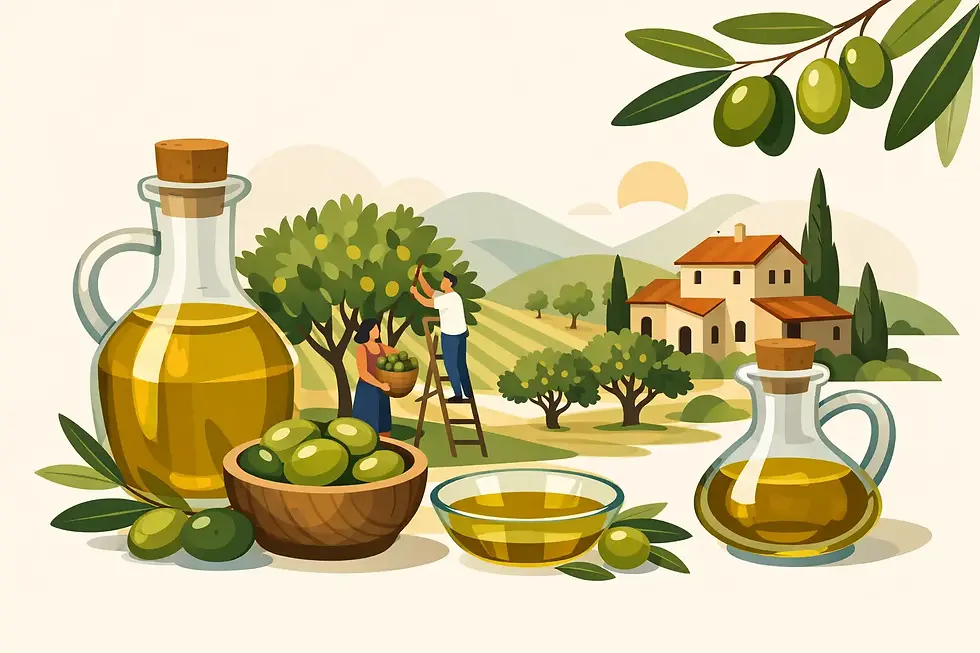
The biggest reason is that olive oil color reflects the fruit itself and the moment it was harvested. Olives picked earlier in the season often produce greener oil because they contain more chlorophyll. Olives picked later, when they are riper, tend to yield oil with more yellow and gold tones due to carotenoids, the natural pigments in the fruit.
That means a greener oil is not automatically better, and a golden oil is not automatically lower quality. Both can be real extra virgin olive oil. Both can be beautifully made. What matters more is whether the oil is fresh, properly extracted, and free of defects.
Why olive oil color changes
If you line up several authentic extra virgin oils from different regions or harvest moments, the variation can be striking. That is normal. Olive variety plays a major role. Some cultivars naturally produce greener oils, while others lean softer and more golden.
Climate matters too. Sun exposure, rainfall, soil conditions, and the overall growing season influence the pigments in the olives. Production decisions also shape the final look. A producer focused on early harvest intensity may bottle an oil with a strong green cast and bold, grassy notes. A producer working with slightly riper fruit may create an oil that looks more golden and tastes rounder, softer, and more floral.
Filtration can affect appearance as well. Freshly pressed oil may look cloudy if tiny olive particles and moisture remain suspended in the liquid. Filtered oil usually looks cleaner and more transparent. Cloudiness is not a guarantee of quality either. It can simply mean the oil is less settled or less filtered.
Green olive oil vs. golden olive oil
Green olive oil often signals younger olives and a fresher, more herbaceous profile. These oils can taste peppery, bitter, and lively in the best way - think cut grass, artichoke, arugula, or green almond. For many olive oil lovers, that boldness is exactly the point.
Golden olive oil often comes from riper olives and may taste more mellow, buttery, or rounded. You might notice softer fruit notes, less bitterness, and a gentler finish. That does not make it inferior. It simply means the oil has a different personality.
This is where taste becomes more useful than sight. If an oil is flat, waxy, stale, musty, or greasy, the problem is not that it is too green or too gold. The problem is that it is poor oil or old oil. Real extra virgin olive oil should smell fresh and alive. It should have character.
Why experts do not judge by color alone
Professional olive oil tasting is done in dark blue glasses for a reason. The color is intentionally hidden so the taster cannot be biased by appearance.
That detail says a lot. If color were a reliable marker of quality, experts would look at it first. Instead, they remove it from the equation. They focus on fruitiness, bitterness, and pepperiness, along with the absence of defects such as rancidity, mold, or fermentation.
For shoppers, that is a useful reset. A bottle with beautiful green oil can still disappoint if it is old, poorly stored, or carelessly produced. A golden oil from a careful harvest and proper milling can be exceptional.
What color can tell you - and what it cannot
Color can offer clues, just not final answers. A very green oil may suggest early harvest olives and a more assertive flavor profile. A golden oil may suggest riper fruit and a smoother taste. Beyond that, the meaning gets fuzzy.
Color cannot confirm whether an oil is truly extra virgin. It cannot tell you the acidity level. It cannot reveal whether the bottle sat too long in a warm warehouse. It cannot tell you if the producer harvested and pressed the olives with care.
This is where provenance matters more than appearance. When you know where the oil was produced, who harvested it, and how quickly it was pressed and bottled, you are on firmer ground than any visual guesswork can give you.
How to tell if extra virgin olive oil is real
If you want to know whether an oil is authentic, look past the shade in the glass and pay attention to the details that actually matter.
First, check for harvest information or a clear indication of freshness. Extra virgin olive oil is a fresh product, not a pantry item that improves with age. The closer you are to the harvest, the more likely you are to taste the oil at its best.
Next, look for traceable origin. A bottle that clearly states where the olives were grown and where the oil was pressed is more reassuring than vague labeling. Terms like imported or packed in Italy are not the same as grown, milled, and bottled by the source.
Then trust your senses. Real extra virgin olive oil should smell like something alive - green leaves, herbs, tomato leaf, almond, apple, or fresh grass, depending on the oil. In the mouth, it should taste fresh and have some bitterness and pepper, especially in more vibrant oils. That peppery catch in the throat is often a good sign of fresh polyphenols, not a flaw.
Finally, consider the producer. Family-rooted oils with direct control over harvest, pressing, and bottling offer a level of confidence that generic blends rarely can. That farm-to-bottle connection matters because olive oil quality can rise or fall quickly depending on handling.
Common myths about the color of real extra virgin olive oil
One myth says real olive oil must be dark green. It does not. Some excellent oils are green, but plenty of authentic extra virgin oils are golden.
Another myth says lighter oil is diluted or fake. Not necessarily. Natural pigment levels vary widely by olive variety and ripeness.
A third myth is that cloudy oil is always more authentic. Sometimes cloudiness just means the oil is unfiltered or recently pressed. That can be desirable, but it is not a quality seal on its own.
There is also the belief that the prettier the color, the better the oil. That is a marketing idea more than a tasting truth. Olive oil is meant to be smelled and tasted, not graded like paint.
What to look for when buying for flavor
For home cooks who care about how an oil finishes a salad, enriches a soup, or lifts a piece of grilled fish, the better question is not what color is real extra virgin olive oil. It is what style of oil do you want on your table.
If you love bold flavor, you may prefer an early harvest oil with a greener cast and more peppery structure. If you want something softer for everyday drizzling, a more golden, rounded oil may suit you beautifully. Neither choice is wrong. It depends on the olives, the season, and your palate.
That is part of the pleasure of authentic olive oil. Like wine, it reflects harvest timing, place, and the hand of the producer. The best bottles are not trying to fit a single visual stereotype. They are expressing the fruit honestly.
For those who value true origin and freshness, that honesty matters. Bonacci EVOO, for example, centers that direct-from-Umbria approach because control over harvest and production says far more about quality than a single color ever could.
When you pour real extra virgin olive oil, let the color be your first impression, not your final verdict. The real answer is in the aroma, the flavor, and the story you can trust behind the bottle.


Comments