

Why Olive Oil Tastes Peppery and Why It Matters

That small catch in your throat after a spoonful of excellent extra virgin olive oil is not a mistake. It is one of the clearest sensory clues that the oil was made from fresh olives with care. If you have wondered why olive oil tastes peppery, the short answer is natural olive compounds - and, often, a well-timed harvest.
For people accustomed to mild supermarket oil, the sensation can be surprising. It may begin as green, grassy fruit on the tongue, turn pleasantly bitter at the sides of the mouth, and finish with a warm peppery tickle in the throat. Some people even cough once or twice. In a high-quality oil, that pungency is a feature of character, not a flaw.
Why Olive Oil Tastes Peppery
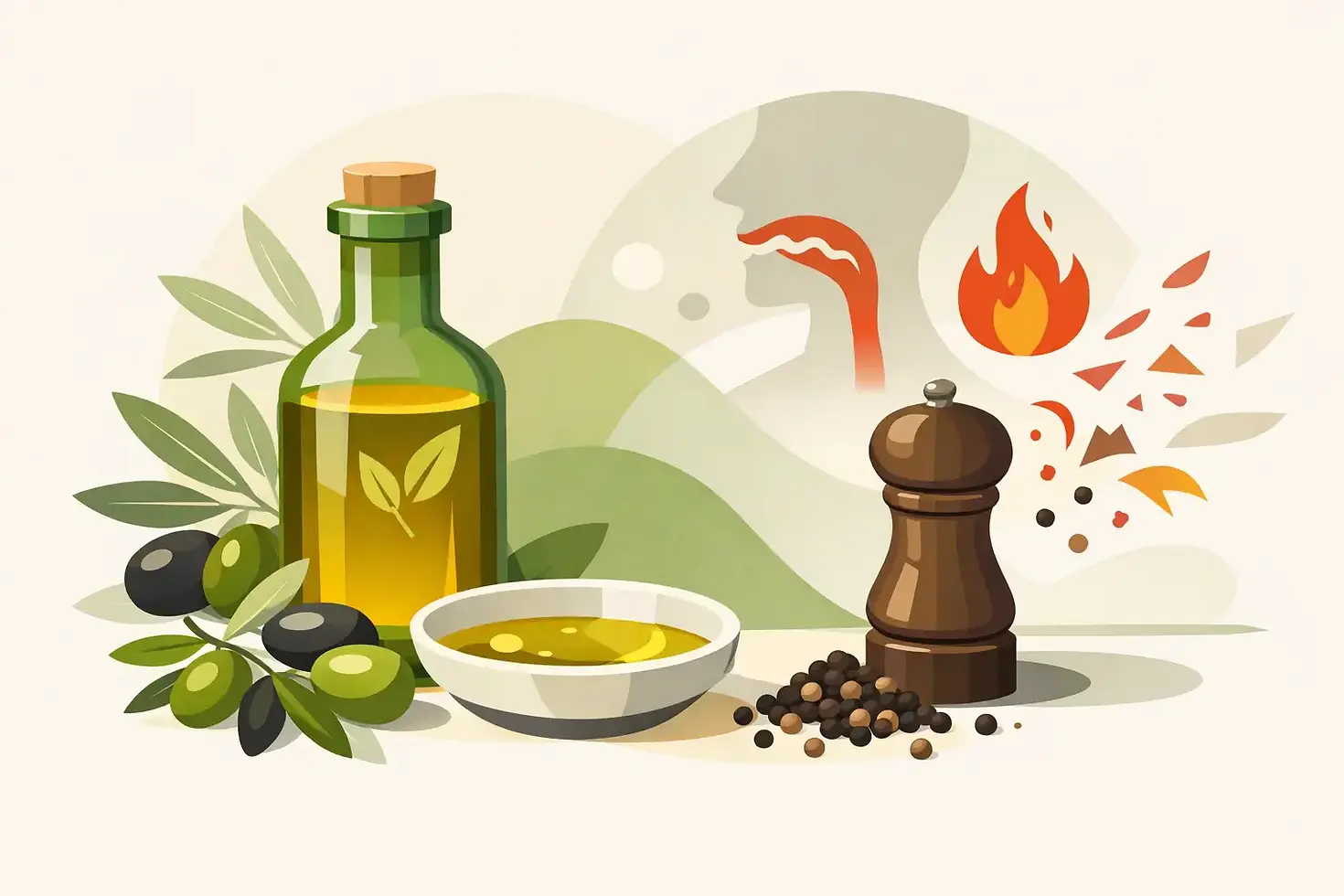
The peppery sensation comes primarily from phenolic compounds, naturally occurring antioxidants found in olives. One of the best known is oleocanthal, which creates a distinctive sting at the back of the throat. It is not the same chemical that makes black pepper spicy, but the sensation is familiar enough that “peppery” is the word most olive oil lovers use.
Olives contain these compounds to protect themselves, and a skilled producer works to preserve them from grove to bottle. Harvesting healthy fruit, moving it quickly to the mill, milling cleanly, and protecting the finished oil from heat, air, and light all make a difference. The result is an oil with aroma, structure, and a finish that stays with you.
That finish is part of the pleasure. Think of it as you would the gentle tannin in a good wine or the bite of fresh arugula. It gives the oil energy and makes simple food taste more alive.
Pungent, bitter, and fruity are a family of flavors
Olive oil tasting has its own vocabulary, but you do not need a tasting certificate to recognize a good oil. The three positive attributes most often discussed are fruitiness, bitterness, and pungency.
Fruitiness is the aroma and flavor of fresh olives. It can suggest cut grass, green tomato, artichoke, almond, herbs, or ripe fruit, depending on the olive variety and harvest. Bitterness arrives on the tongue and can resemble chicory, radicchio, or walnut skin. Pungency is the peppery feeling in the throat.
These qualities often travel together because they come from the same fresh, well-handled fruit. A lively oil may have all three, yet still feel balanced. The goal is not aggression for its own sake. The goal is an oil whose green fruit, bitterness, and peppery finish belong together.
Harvest Timing Shapes the Peppery Finish
An olive picked while it is still green generally produces an oil with more intense green aromas, bitterness, and pungency. These early-harvest oils tend to have higher levels of phenolic compounds, though yields are lower because greener olives contain less oil. For a family producer, choosing to harvest early can mean accepting less volume in exchange for more flavor and freshness.
As olives ripen from green to purple and black, the oil often becomes softer, rounder, and more mellow. That does not make later-harvest oil inferior. It simply creates a different style, often appealing for baking, delicate fish, or anyone who prefers a gentler finish.
Olive variety matters, too. Some Italian cultivars are naturally more assertive, while others are sweet and buttery. Weather, elevation, soil, and the particular growing season influence the final profile. This is why two true extra virgin olive oils can taste dramatically different while both are beautifully made.
For an oil from Umbria, it is natural to expect personality. The region’s hills, local cultivars, and long olive-growing tradition often yield oils with herbaceous notes, green almond, and a confident peppery close. That character is part of what makes a single-region oil more memorable than a generic blend designed to taste the same year after year.
Peppery Does Not Mean Harsh
There is an important distinction between a fresh peppery oil and an oil that is simply unpleasant. High-quality pungency feels clean. It rises briefly in the throat, then fades, leaving you ready for another taste. It should be supported by a fresh aroma and a pleasing olive-fruit flavor.
Harshness can feel flat, burning, or out of balance. It may come without any attractive fruitiness. Rancid oil, on the other hand, can smell like stale nuts, old crayons, or a neglected pantry. It may taste greasy rather than bright. Those are defects, not signs of a powerful oil.
A peppery finish alone is not a guarantee of quality. Some excellent oils are intentionally mild, and intensity varies by cultivar and season. But when pepperiness appears alongside fresh aromas, a balanced bitterness, and clear provenance, it is a meaningful signal that you are tasting a living agricultural product rather than a bland cooking fat.
How to Taste Peppery Olive Oil at Home
You do not need a formal tasting setup. Pour a small amount into a clean glass, warm it gently in your hand, and cover the top for a minute to hold in the aroma. Take a small sip, let the oil move across your tongue, then swallow or draw in a little air.
First, notice the scent. Does it remind you of grass, herbs, tomato leaf, apple, or almond? Then pay attention to the sequence of flavor. Is there fruit at the beginning? A pleasant bitter edge? Does the peppery feeling appear at the back of the throat?
Try the same oil on a warm piece of bread, a slice of ripe tomato, or a spoonful of white beans with a pinch of salt. Food reveals balance. An oil that seems bold on its own can become exactly right when it meets creamy burrata, grilled vegetables, lentils, roasted chicken, or a simple bowl of pasta.
When to Use a Peppery Extra Virgin Olive Oil
A peppery oil earns its place at the finish, where its aroma and pungency remain unmistakable. Drizzle it over grilled steak, roasted potatoes, bruschetta, soups, pizza, or eggs. Spoon it onto a platter of sliced peaches and fresh ricotta. Finish a bowl of beans with olive oil, lemon, and herbs, and the dish will taste composed rather than complicated.
It also has a role in cooking. Extra virgin olive oil is excellent for sautéing, roasting, and pan-cooking at sensible temperatures. Still, if your bottle has especially vivid green notes, save at least some of it for finishing. Heat changes delicate aromas, and the final drizzle is where a fresh oil can show you why it was worth choosing.
A softer oil may be the better choice for a vanilla olive oil cake or a mild vinaigrette. This is not a contest in which the most peppery bottle always wins. Matching the oil to the dish is the more satisfying approach.
Freshness Is What Keeps the Flavor Alive
The peppery character you love is perishable. Light, heat, and oxygen gradually soften an oil’s aroma and phenolic structure. Buy oil with a clear harvest date when possible, store it in a cool, dark cupboard away from the stove, and close the cap promptly after pouring.
A dark bottle helps protect the oil, but it cannot reverse time. Once opened, use it regularly rather than saving it for an imagined special occasion. True extra virgin olive oil is one of the simplest ways to make an ordinary meal feel generous, and it deserves a place on the table.
Bonacci EVOO is produced with that direct connection in mind: olives from Umbria, handled from harvest through bottling, then brought to American kitchens as a seasonal collection. The variation from one harvest to the next is not something to hide. It is evidence that olive oil has a place, a season, and a maker behind it.
The next time a spoonful brings a gentle cough or a bright peppery spark, let it slow you down for a second. Pour it over something warm, taste it before the food disappears, and enjoy the unmistakable liveliness of fresh olives.


Comments